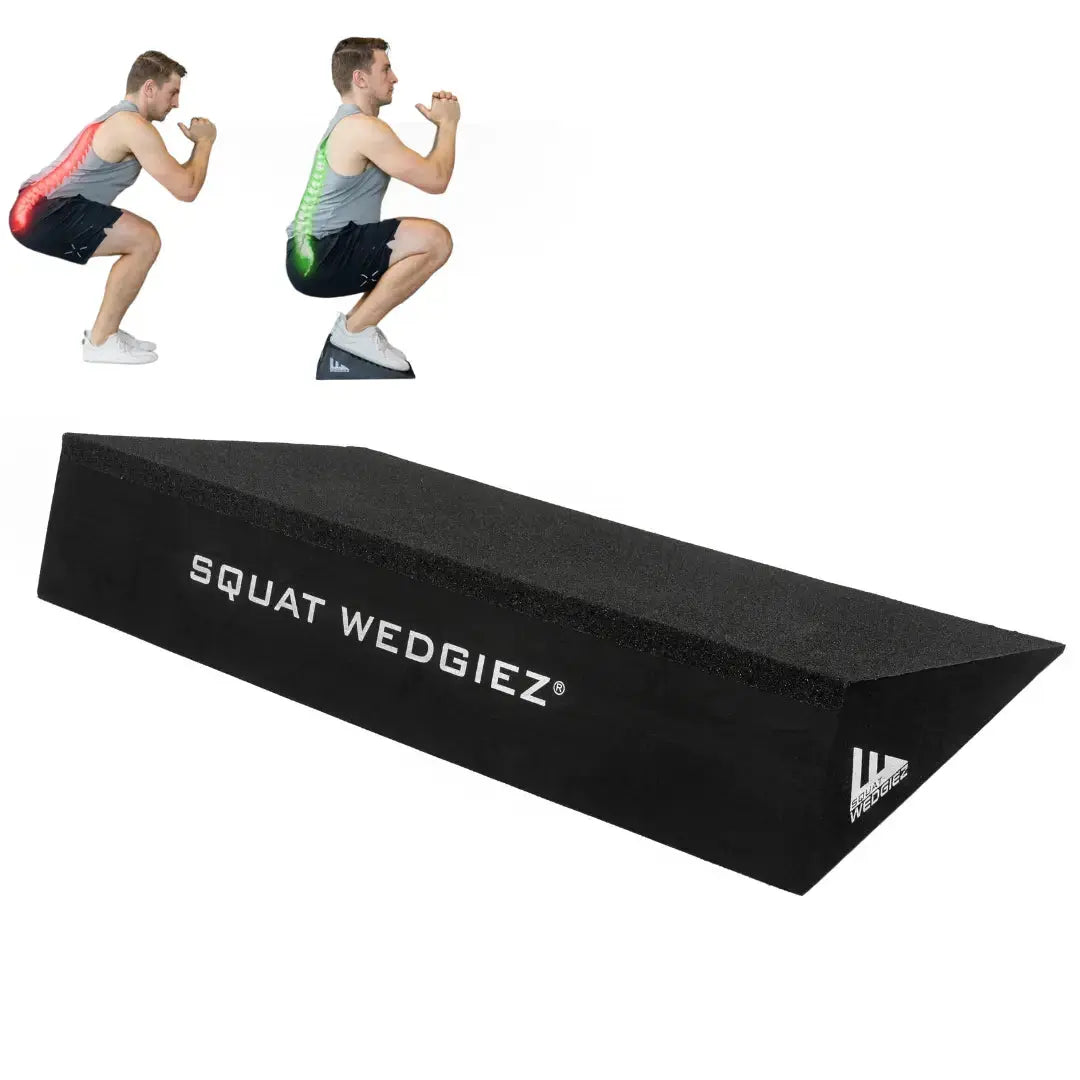
20 Degree SumoWedgie
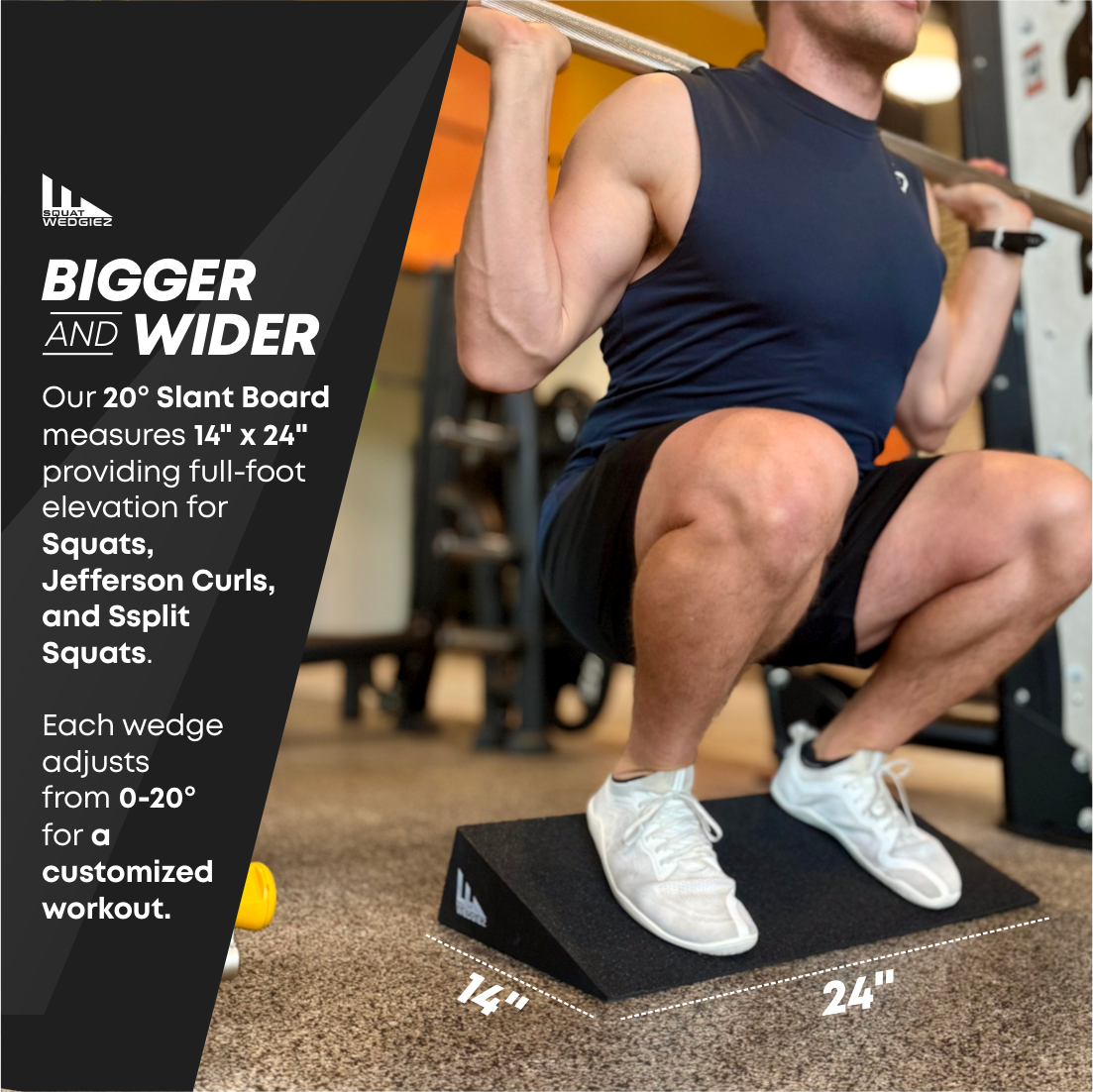
24 inches wide. Perfect for wide stance squats & tight calves. Travel-Friendly.
- Exercise video database
- Anti-inflammatory food shopping list & sleep routine
- Five workouts per week

Free Shipping
All orders ship free from our Los Angeles facility within 24 hours excluding pre-orders. Continental U.S. only.

90 Day Guarantee
Try it risk free. If you're not satisfied for any reason, get a full refund within 90 days.

Free Returns
Return or exchange your order within 90 days. No hassle, no questions asked.
Elevate Your Workout. Instantly.
One tool. Three game-changing benefits that transform every workout.
More Gains, Less Pain
-

Wide Or Narrow.
You Decide.Most slant boards are too narrow for a true sumo stance. The Sumo Wedgie's oversized platform means your feet are always fully supported — no matter how wide you go.
- 24" wide x 13" long — built for real wide stance training
- Supports sumo, wide, and narrow stances on one board
- Full foot contact means more stability under heavy load
-

Reduce Back Pain.
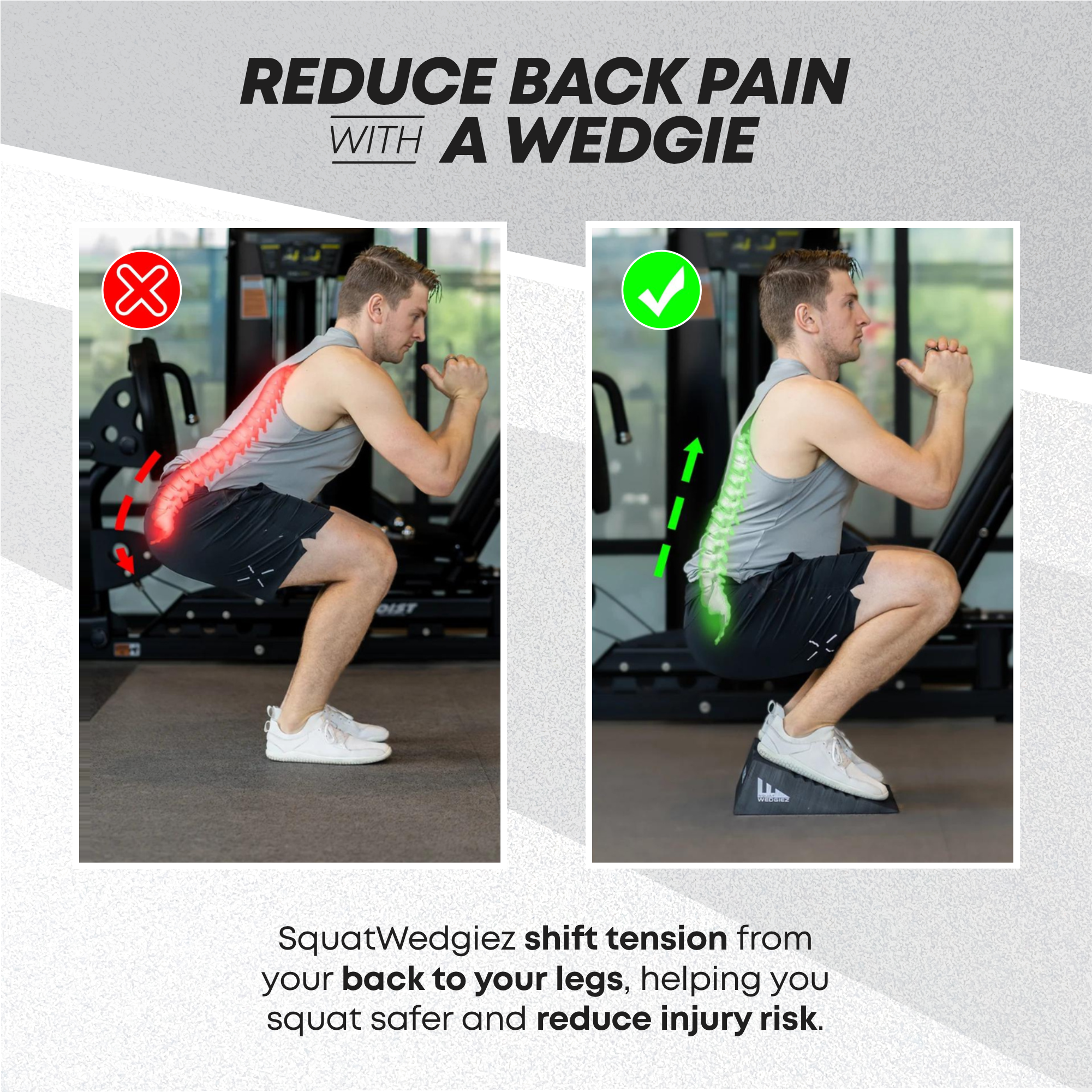
Train For Longer.Heel elevation shifts the load from your lower back to your quads and glutes — where it belongs. Less spinal compression means less pain, better form, and more productive training sessions.
- Shifts tension from lower back to legs
- Reduces spinal compression under load
- Keeps your torso more upright naturally
-

Stretch Tight
Hamstrings & Calves.Tight hamstrings and calves are one of the biggest limiters of squat depth and athletic performance. Elevating your toes on the Sumo Wedgie creates an immediate, deep stretch through the entire posterior chain — from your Achilles all the way up to your hamstrings.
- Deeper hamstring stretch than flat ground allows
- Relieves calf and Achilles tightness instantly
- Improves squat depth and athletic mobility over time
Engineered to Last. Built to Perform.
Every feature of the Sumo Wedgie is designed to make your training safer, more effective, and more consistent.
Lightweight. Durable.
-

One Perfect
Angle. 20°.The Sumo Wedgie is engineered at a fixed 20° slope — the optimal angle to strengthen your knees and stretch tight calves. The 13" platform lets you position your foot anywhere from flat to full elevation, giving you complete control over your angle.
- Fixed 20° slope — no assembly or adjusting needed
- Optimal angle for squats, hip thrusts and calf raises
- 24" wide x 13" long platform for full foot support
-

Stays Put.
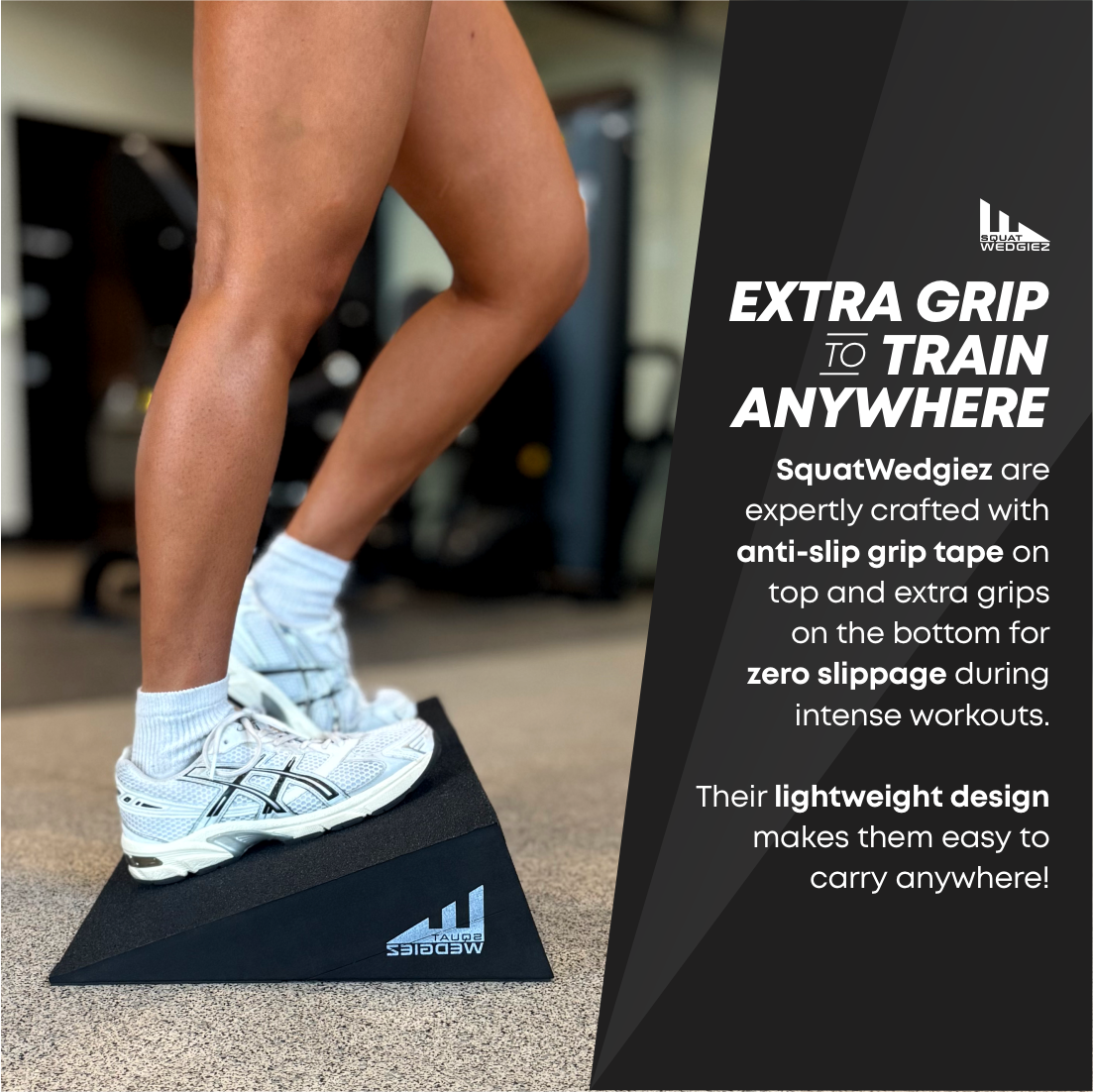
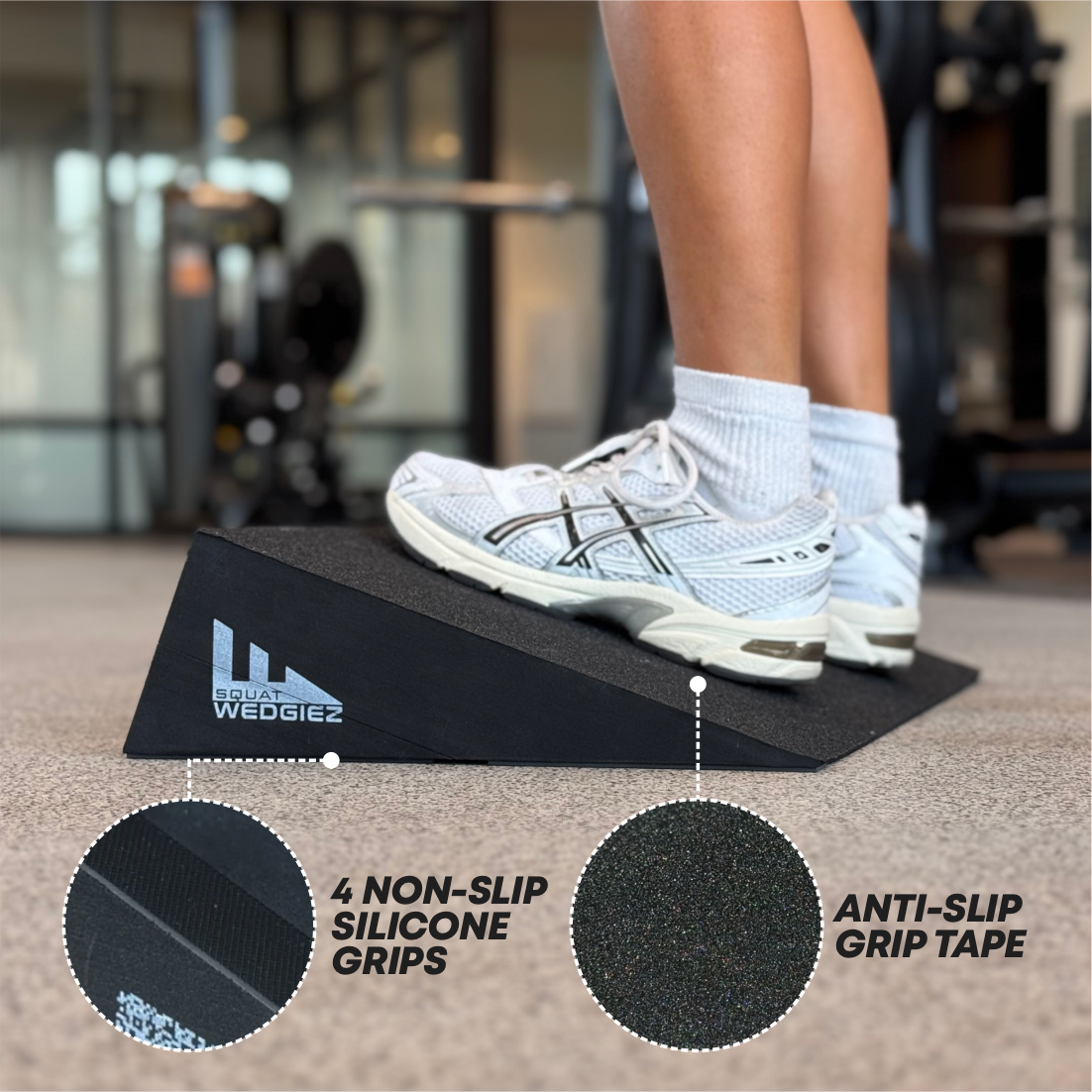
Every Rep.The 4 silicone grips on the bottom lock the board to the floor, and the grip tape surface keeps your feet planted — so you can focus on lifting, not adjusting your equipment between sets.
- 4 silicone grips prevent sliding on any floor surface
- Grip tape top keeps feet locked in position
-

Built Tough.
Goes Anywhere.High density foam construction holds up to 1,000 lbs but weighs only 4 lbs — tough enough for your heaviest sets, light enough to throw in your gym bag and train anywhere.
- Holds up to 1,000 lbs of load
- Only 4 lbs — travel and gym bag friendly
- High density foam keeps its shape over time
3 Main Reasons
There's a biomechanical reason elite coaches have used heel elevation for decades — and it works from your very first rep.
Improves Squat Depth Immediately
Limited ankle mobility restricts how deep you can squat. Heel elevation reduces the dorsiflexion demand at the ankle, allowing your knees to travel forward naturally so you can hit full depth from rep one.
Increases Quad Activation
Heel elevated squats shift more load onto your quads and glutes — the muscles that are supposed to be doing the work. More quad activation means stronger legs, better knee tracking, and more effective training.
Keeps Your Torso More Upright
Excessive forward lean during squats is one of the most common form breakdowns. Heel elevation allows your torso to stay upright naturally, reducing trunk lean and keeping your center of mass balanced over your feet.
FAQs
Got
Questions?
Everything you need to know about the Sumo Wedgie 20° wide stance slant board before you buy.
The Sumo Wedgie is a 20° heel elevation slant board specifically engineered for wide stance squat training. It features an extra-wide shared platform that gives both feet a stable, elevated surface in a sumo or wide squat stance, which standard individual foot wedges and narrow slant boards cannot provide.
It is designed for powerlifters, bodybuilders, and athletes who primarily squat wide and need a dedicated heel elevation tool that accommodates their stance without forcing them to narrow their feet. By elevating both heels simultaneously at 20°, the Sumo Wedgie improves squat depth, reduces ankle dorsiflexion demand, promotes a more upright torso, and increases quad and glute engagement in the wide stance position.
The Sumo Wedgie is 24 inches wide, 13 inches long, and 4.5 inches tall with a fixed 20° slope. It weighs just 4 pounds, making it light enough to carry to the gym while remaining stable and non-slip under heavy barbell loads. The 24-inch wide platform is the defining feature, giving wide stance athletes the foot space they need without either foot hanging off the edge of a standard slant board.
A wider stance actually requires less ankle dorsiflexion than a narrow stance because the turned-out foot position places the tibia more perpendicular to the ankle, naturally reducing how far the ankle needs to flex to reach depth. However, limited ankle mobility can still restrict squat depth and mechanics in any stance, including wide stance squats.
The 20° heel elevation of the Sumo Wedgie reduces the dorsiflexion demand further, allowing your knees to track forward, your hips to drop deeper, and your torso to stay upright throughout the movement. This produces better squat depth, greater quad and glute activation, and reduced strain on the lower back.
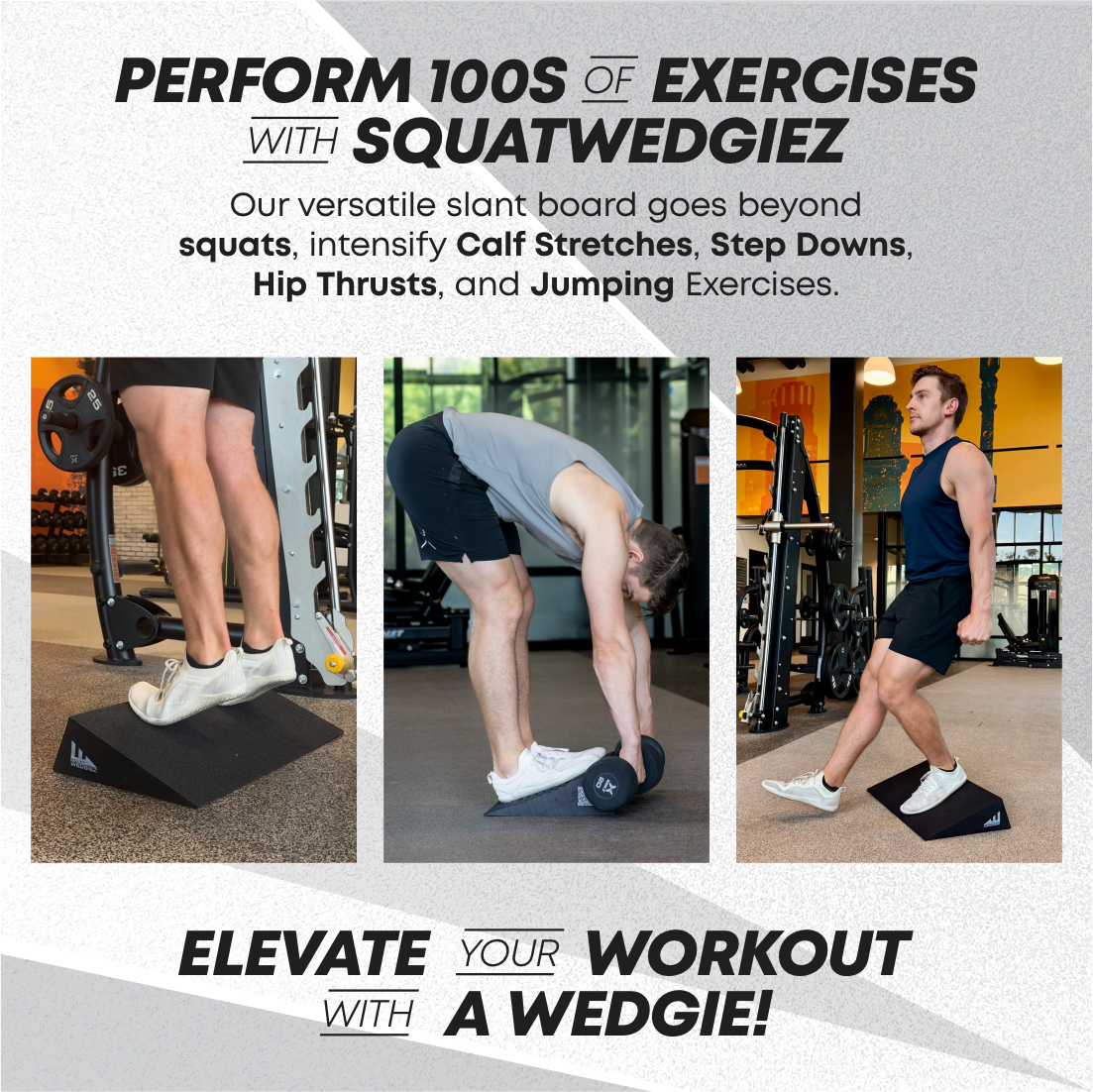
The Sumo Wedgie is primarily designed for wide stance back squats, sumo squats, hack squats, leg press variations, wide stance goblet squats, and calf raises. The wide platform also makes it suitable for any lower body movement where both feet need to be elevated simultaneously in a wider than shoulder-width stance, which standard narrow slant boards cannot support safely.
Yes, although the relationship between ankle mobility and stance width is worth understanding. A wider stance actually requires less ankle dorsiflexion than a narrow stance because the turned-out foot position places the tibia more perpendicular to the ankle, naturally reducing how far the ankle needs to flex to reach depth.
That said, limited ankle mobility can still restrict squat depth and mechanics in any stance. The 20° heel elevation of the Sumo Wedgie reduces the dorsiflexion demand further, allowing your knees to track forward and your hips to reach full depth comfortably. You can train with proper mechanics immediately while addressing ankle mobility in parallel through stretching and mobility work.
Both boards share the same 24-inch wide platform, so width is not the difference. The key distinction is weight and intended use. The Sumo Wedgie weighs just 4 pounds with a fixed 20° slope, making it a lightweight, portable option ideal for athletes who primarily train in a wide stance.
The SquatWedgie PRO is our commercial grade product at 60 pounds combined, engineered for the demands of gyms, sports teams, and serious athletes who need a heavy-duty adjustable system that handles high volume training day after day. It offers three angles at 10°, 15°, and 25°, making it the most versatile and durable option in the lineup.
No. The Sumo Wedgie features a non-slip base that keeps it firmly in place on rubber gym flooring, hardwood, and concrete. It is designed to stay put under heavy barbell loads in a wide stance without shifting between reps or sets. You can load up and squat with confidence knowing the platform is stable beneath you.
Every athlete trains differently and the right squat wedge depends on your stance, mobility, and goals. Take our quiz and we will match you to the perfect heel elevation tool in under a minute.
We stand behind every SquatWedgiez product 100%. Try the Sumo Wedgie for a full 90 days. If you do not feel a measurable improvement in your wide stance squat depth, comfort, or lower body mechanics, simply reach out and we will make it right.
We offer free returns within the continental U.S. so there is zero risk in trying it. No stress, no hassle, no questions asked. Our goal is to help you squat better. If we do not deliver on that, you should not have to pay for it.